

Sending out a single request for quotation is easy. Managing dozens of them at the same time, across departments, categories, and suppliers, is where procurement teams start to struggle. Deadlines slip, quotations arrive in different formats, and nobody has a clear view of which requests are open, which are late, and which have already been awarded.
RFQ management software exists to solve that operational problem. This article looks at what it means to manage RFQs well, what the software should handle for you, and which metrics show whether your process is actually working.
Running an RFQ vs Managing RFQs
Running an RFQ means completing one sourcing event: define the need, ask suppliers, compare answers, choose. Managing RFQs means keeping many of these events under control at once. That requires visibility, consistency, and accountability that a spreadsheet cannot provide when volumes rise.
A good management layer answers everyday questions instantly: How many RFQs are open right now? Which suppliers have not responded? Which awards are waiting for approval? How long does a typical RFQ take from request to purchase order?
The RFQ Lifecycle in a Managed Process
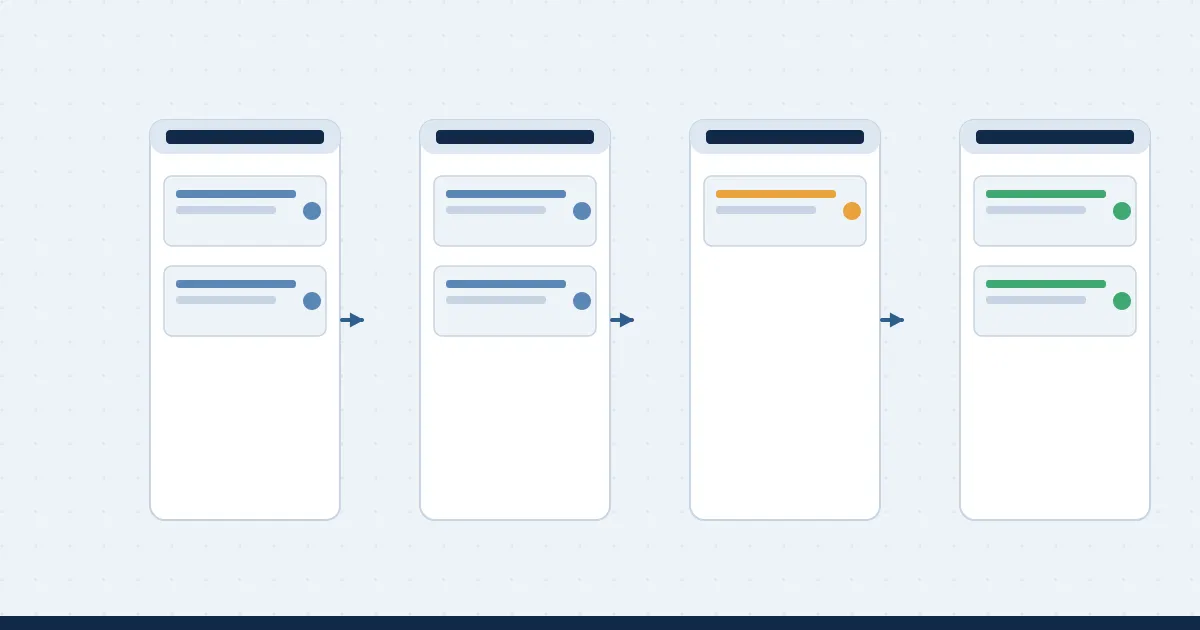
Every RFQ passes through the same stages, and management software tracks each one:
- Draft. The buyer builds the request from a template, with line items, specifications, and terms.
- Published. Invited suppliers receive the RFQ and the response window opens.
- Collecting responses. Quotations arrive, questions are logged, and reminders go out automatically.
- Evaluation. Responses are compared and scored against agreed criteria.
- Approval. The recommended award is routed to the right approvers.
- Awarded. The winning supplier is notified, unsuccessful suppliers receive updates, and a purchase order is raised.
- Closed and archived. The complete record is stored for audit and future reference.
Seeing every RFQ by stage makes bottlenecks obvious. If most requests sit in evaluation, you have a scoring problem. If they sit in approval, the approval chain needs simplifying.
Supplier Management Comes With the Territory
RFQs are only as good as the suppliers you invite. Effective RFQ management software keeps a central supplier record with contact details, categories supplied, certifications, past quotations, and performance history. That allows buyers to shortlist quickly and consistently, instead of relying on whoever they remember from the last purchase.
Over time, response rates and quotation accuracy become useful signals. A supplier who regularly quotes late or changes prices after award can be flagged, while reliable responders can be prioritized for urgent requirements.
Structured Evaluation and Scorecards
Price matters, but it is rarely the only factor. Delivery lead time, payment terms, warranty, quality history, and compliance documentation all influence the right decision. Management software should let you define weighted criteria before the RFQ goes out, so evaluation is objective and repeatable.
Documented scoring also protects the buyer. If a decision is questioned months later, the scorecard shows exactly how each supplier was assessed.
Governance, Approvals, and Audit Trails
Approval rules should follow your organization’s authority matrix rather than individual habits. Typical rules route awards by value, cost center, or category, with automatic escalation when someone is unavailable. Every action, from a changed line item to an approval comment, should be logged with a name and timestamp.
This is what turns procurement from a black box into something internal audit, finance, and management can trust.
Metrics That Show Whether Your RFQ Process Works
| Metric | What it tells you |
|---|---|
| RFQ cycle time (request to PO) | How quickly the organization turns needs into orders |
| Supplier response rate | Whether you are inviting the right suppliers and giving them enough time |
| Number of quotations per RFQ | How competitive your sourcing really is |
| Approval turnaround | Where governance is helping or slowing you down |
| Savings vs first quote or budget | The commercial value the process creates |
| RFQs awarded without competition | Where policy exceptions are happening |
Why Integration Matters
RFQ data should not be trapped in one tool. When an award becomes a purchase order, the details should flow to your finance system without retyping. That is why ERP and systems integration is a central part of any serious rollout: it keeps supplier records, budgets, and orders consistent across the systems your teams already use.
Choosing RFQ Management Software
When comparing options, look beyond the demo and ask practical questions:
- Can non-technical buyers build an RFQ from a template in minutes?
- Can suppliers respond without installing anything or creating a complicated account?
- Are approval rules configurable without vendor help?
- Does the audit trail capture every change and decision?
- Can it connect to your ERP, and how is that integration handled?
- Is pricing clear as your volume and user count grow?
An integrated RFQ-to-PO procurement platform removes the hand-offs where errors and delays usually creep in, which is why many teams prefer it to a standalone quoting tool.
Common Mistakes to Avoid
- Digitizing a broken process. Automating a confusing approval chain only makes confusion faster. Simplify first.
- Skipping supplier onboarding. If suppliers do not understand the portal, they will keep replying by email.
- Ignoring data quality. Duplicate supplier records and inconsistent categories undermine reporting.
- Measuring nothing. Without baseline metrics, you cannot show the value of the change.
Conclusion
RFQ management software gives procurement teams control over the whole sourcing pipeline, not just individual events. With clear lifecycle tracking, structured evaluation, enforced approvals, and reliable metrics, the RFQ process stops being a source of friction and becomes a dependable way to secure fair prices and accountable decisions.
About NexTek Global
NexTek Global provides enterprise software and implementation services, including the ePurchase procurement automation platform and the GPTCor enterprise AI governance platform, with teams in Norcross, Georgia and Karachi, Pakistan. Learn more at NexTek Global.
